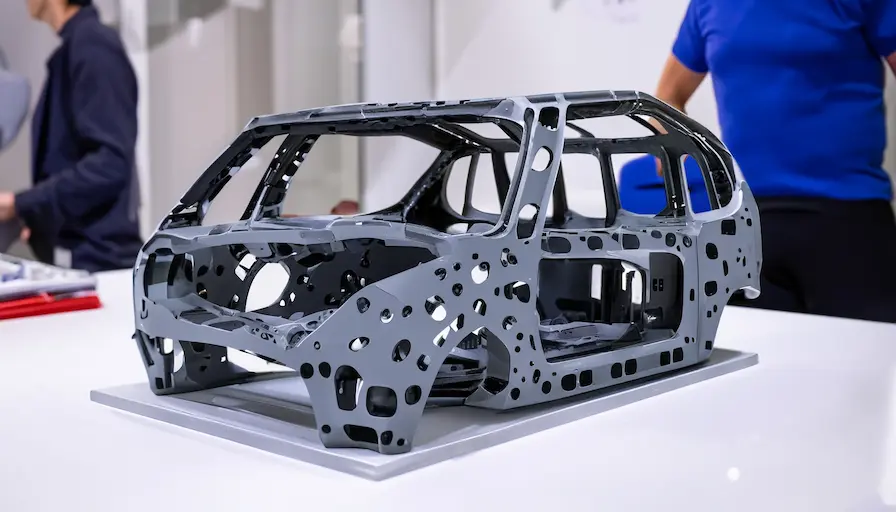
The automobile industry is no stranger to innovation and technological advancements, and 3D printing has emerged as a transformative force within this sector. 3D printing, also known as additive manufacturing, has revolutionized various aspects of automobile design, production, and maintenance. In this article, we will explore the manifold ways in which 3D printing is leaving its indelible mark on the automobile industry.
Rapid Prototyping and Design Iteration
Streamlined Product Development: 3D printing accelerates product development cycles in the automobile industry. It allows designers and engineers to rapidly prototype and iterate their designs, significantly reducing the time required to bring new vehicles and components to market.
- Cost Savings: Traditional prototyping methods are expensive and time-consuming. 3D printing reduces both material waste and production costs associated with creating prototypes, making it a cost-effective choice for manufacturers.
- Complex Geometries: Automobile components often require intricate and complex shapes for optimal performance. 3D printing enables the creation of parts with geometries that would be challenging or impossible to achieve using traditional manufacturing methods.
Customization and Personalization
- Tailored Vehicles: 3D printing offers the potential for highly customized vehicles. Customers can select personalized features, from interior design elements to exterior aesthetics, resulting in a unique driving experience.
- Custom Parts: For automotive enthusiasts, 3D printing opens the door to customized vehicle parts and accessories. From bespoke dashboard designs to personalized steering wheel grips, the possibilities are virtually endless.
Lightweighting and Material Optimization
- Reduced Weight: The quest for fuel efficiency and improved performance has led to the adoption of lightweight materials. 3D printing allows for the creation of lightweight yet robust components, helping to reduce the overall weight of vehicles and enhance fuel efficiency.
- Material Efficiency: Traditional manufacturing processes often generate significant material waste. 3D printing minimizes waste by using only the necessary amount of material, contributing to sustainable and eco-friendly manufacturing practices.
Supply Chain Efficiency
- On-Demand Production: 3D printing enables on-demand production of spare parts and components. This reduces the need for extensive warehousing and logistics operations, making the supply chain more efficient.
- Localized Manufacturing: With 3D printing, manufacturers can establish localized production facilities, bringing production closer to consumers. This strategy reduces transportation costs and lead times, benefiting both manufacturers and customers.
Tooling and Fixturing
- Custom Tools: 3D printing facilitates the creation of custom jigs, fixtures, and tools for manufacturing and assembly processes. These tailored tools improve efficiency and accuracy on the production line.
- Cost Savings: Traditional tooling methods are costly and time-consuming. 3D printing reduces tooling expenses and allows for rapid tool development, saving both time and resources.
Sustainable Manufacturing
- Material Recycling: 3D printing materials can often be recycled and reused, reducing the environmental impact of manufacturing.
- Energy Efficiency: The additive manufacturing process is inherently energy-efficient, consuming less power compared to some traditional manufacturing methods.
Maintenance and Repairs
- Spare Parts Production: 3D printing is invaluable for producing spare parts for legacy vehicles, reducing the challenges associated with sourcing discontinued components.
- Efficient Repairs: Mechanics and service centers can use 3D printing to create replacement parts quickly, minimizing vehicle downtime and reducing repair costs.
Innovative Concepts and Prototypes
- Concept Vehicles: Automobile manufacturers use 3D printing to bring innovative concept vehicles to life, showcasing cutting-edge technologies and designs.
- Testing New Ideas: Engineers can quickly test and iterate new ideas and technologies using 3D-printed prototypes, expediting the innovation process.
Improved Safety and Performance
- Crash Testing: 3D printing facilitates the creation of realistic crash test dummies and vehicle models for safety testing, leading to safer automobile designs.
- Performance Enhancement: Components designed with 3D printing can be optimized for strength and performance, contributing to safer and more reliable vehicles.
In conclusion, 3D printing has ushered in a new era of innovation and efficiency in the automobile industry. From rapid prototyping to customized vehicles, lightweighting, and sustainable manufacturing, the impact of 3D printing on this sector is profound. As technology continues to evolve, we can expect further advancements that will reshape the way automobiles are designed, produced, and maintained. The automobile industry is driving forward with 3D printing, paving the way for a future where cars are not only safer and more efficient but also uniquely tailored to individual preferences.