Abstract:
This case study delves into a revolutionary approach to manufacturing fan motor casings. Faced with frequent breakage due to low-quality materials, the solution was found in 3D printing technology and MJF PA 12 material. The transformation from physical to digital through scanning, engineering, and printing has not only improved durability but also opened the door to innovative designs.
Introduction:
In the world of manufacturing, durability and design are paramount. However, achieving both simultaneously can be a challenging endeavor. Fan motor casings, in particular, have been plagued by issues of fragility and a lack of aesthetic appeal. This case study explores a transformative solution to this problem: 3D printing technology and MJF PA 12 material.
Part 1: The Problem – Frequent Breakage due to Low Quality
Fan motor casings, essential components in various industries, were facing a severe problem – they were prone to frequent breakage. This not only resulted in costly replacements and maintenance but also compromised the performance of the equipment. The root cause of this problem was the utilization of low-quality materials that lacked the required durability.
Part 2: The Solution – Enter the 3D Printing Revolution!
To address the issue of frequent breakage, a revolutionary approach was adopted – 3D printing technology. This technology had the potential to create fan motor casings that were not only stronger but also highly customizable in design. The solution aimed to marry durability with aesthetics, revolutionizing the manufacturing process.
Part 3: Material Matters – Strong and Durable MJF PA 12
The choice of material in 3D printing plays a pivotal role in determining the quality and durability of the end product. In this case, MJF PA 12 material was selected for its strength and durability. This material promised to withstand the rigors of industrial applications, ensuring that the fan motor casings would last longer and require fewer replacements.
Part 4: Technology Unleashed – MJF Magic
The technology that would make this transformation possible was Multi Jet Fusion (MJF). MJF technology offered several advantages, including high precision, speed, and the ability to work with MJF PA 12 material effectively. This technology was poised to revolutionize the manufacturing process of fan motor casings.
Part 5: The Process – Scan, Engineer, Print
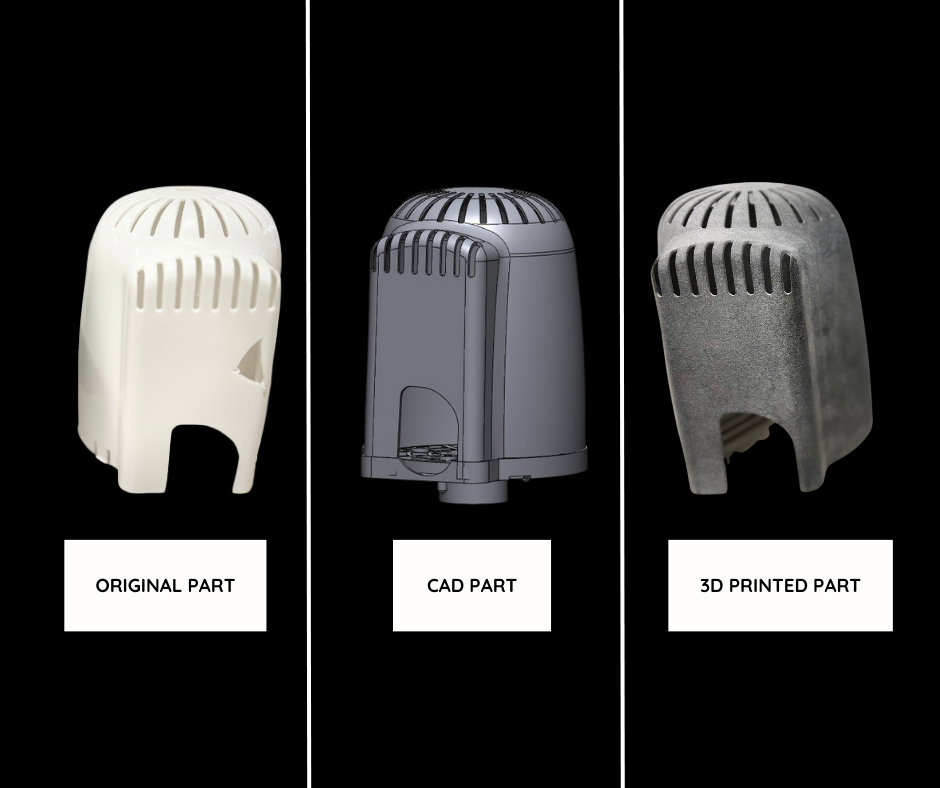
The transition from traditional manufacturing methods to 3D printing was streamlined into a three-step process: Scan, Engineer, and Print. This simplified approach not only reduced the complexity of manufacturing but also allowed for greater customization and design innovation.
Part 6: Results – Elevating Fan Motor Casings with MJF Technology
The implementation of MJF technology and MJF PA 12 material yielded remarkable results. Fan motor casings that were once brittle and prone to breakage were now robust and resilient. The marriage of strength and aesthetics was achieved, transforming the casings from functional components to visually appealing assets.
Part 7: Seamless Transformation from Physical to Digital
One of the most remarkable aspects of this transformation was the seamless transition from a physical part to a digital CAD file. The process began with the scanning of existing casings, which were then meticulously engineered to optimize strength and design. Once perfected, these digital models were ready for printing.
Part 8: Revolutionizing Customization
The 3D printing revolution brought forth the potential for customization that was previously unimaginable. Fan motor casings could now be tailored to specific requirements, whether it be for unique machinery or to incorporate branding elements. This newfound flexibility opened doors to innovation and differentiation in design.
Part 9: Future Prospects and Industry Impact
The success of this case study not only transformed the manufacturing of fan motor casings but also holds promise for various industries. The adoption of MJF technology and MJF PA 12 material has the potential to revolutionize durability and design across multiple sectors, from aerospace to automotive.
Conclusion:
The integration of 3D printing technology, MJF PA 12 material, and the simplified process of scanning, engineering, and printing has redefined the manufacturing landscape for fan motor casings. This case study showcases the potential for innovation and improvement when technology meets the demands of durability and design. It stands as a testament to the power of reimagining traditional manufacturing processes and the enduring quest for excellence.